

Welcome to the holiday ConcRE_t Coffee! Sylwia Hull-Wosiek decided to use the context of travel this time, showing how a corporate trip can become the basis for building close-knit and supportive teams. She invited to the conversation - Lukasz Dlugowski, a wolf tracker and translator of the language of nature into human experience.

During the meeting we talked about it:

- How expeditions into the wilderness form close-knit teams,

- How to translate the language of nature into experience,

- What business can learn from nature.

Lukasz Dlugowski - has been tracking wolves for 8 years. He gathered experience on their habits, hunting and tracking techniques in Poland, Italy, Mongolia, Romania and Jordan. Through his expeditions: "Tracking Wolves" in the Bialowieza Forest, Borecka Forest and Zywiec Beskid, more than 1,000 people have passed through, including families with children. Creator of the "Immersive guiding" method, president of the "Wild" Foundation. He is a graduate of philosophy, a certified tour guide of Rewilding Europe, author of the idea of Micro tours in Poland and the book "Micro tours in the big city". He was a journalist for 10 years, including at Gazeta Wyborcza. In 2022, for the Tatra National Park, he led a nationwide educational campaign on responsible tourism. He has trained and/or lectured for, among others: McKinsey, PKO BP, Kompania Piwowarska, Dell, Adamed, Carpathia reserve.
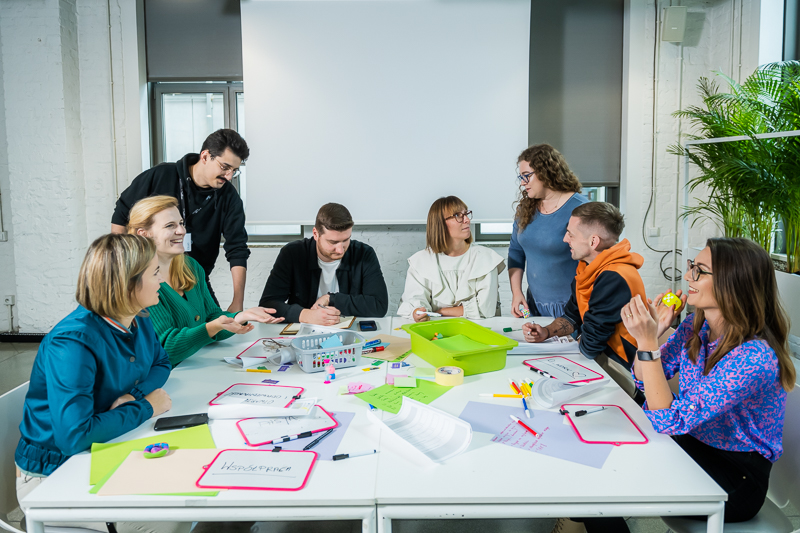
In this installment of ConcRE_t Coffee we will talk about events. Specifically, how to design them effectively and create top-notch events.

Our experts, Karolina Antoniak - Head of Events at sprawny.marketing and Wojciech Markowski - Head of Sales at sprawny.marketing, in conversation with Sylwia Hull-Wosiek #ConcordiaDesign, share their experience and valuable tips with you.
The experts emphasize that the key to successful events is to understand the needs of the client and participants. Karolina Antoniak discusses the importance of creativity and innovation in event design, and Wojciech Markowski shares strategies for effective budget and logistics management. During the conversation, the presenters also share practical tips for engaging attendees and creating unique experiences that stand out from the competition.
Watch the full video here.


Follow our Concordia Design blog for more inspiring content on event design and organization.

The interview with Marta Karwacka, sustainability expert and senior manager at Deloitte, conducted by Katarzyna Andrzejczyk-Briks, focused on the phenomenon of greenwashing.

Guestcini explained that greenwashing involves misleading consumers by companies that claim to be green but have no proof of this. She noted the growing awareness of consumers and their demands for clear and specific information about companies' sustainable operations.

During the discussion, various forms of greenwashing were discussed, such as "green labeling" (false green labeling), "green shifting" (shifting responsibility to consumers), "green lighting" (emphasizing single green actions while omitting harmful practices) and "green hushing" (avoiding discussion of ESG-related actions).

Marta Karwacka stressed that companies face new regulations, such as the CSR-RD directive on non-financial reporting and the Green Claims directive on sustainability communications. She noted that companies will have to change the way they report and communicate to avoid accusations of greenwashing.

The discussion revealed that current and future regulations require companies to be authentic and transparent in communicating about their sustainability efforts. Karwacka noted that a systemic change is needed, both within companies and in society, to effectively combat greenwashing and promote true environmental responsibility.

The meeting concluded by saying that consumers and citizens are increasingly influencing companies, forcing them to be more responsible and transparent on environmental and sustainability issues.

In conclusion, this meeting at Concordia Design with Marta Karwacka revealed the complexity and urgency of the greenwashing issue. In an era of growing environmental and social awareness, understanding how companies communicate their sustainable actions becomes crucial. The discussion showed how important it is for companies to be authentic and transparent, and how much influence consumers and citizens have in shaping business practices.

See the entire recording of the meeting with learn more about the problem of greenwashing and social and environmental responsibility in today's world. This is not only valuable knowledge for those involved in business, but also for every conscious consumer and citizen. 

During a recent ConcRE_t Kawa online meeting, Sylwia Hull-Wosiek, an expert at Concordia Design, spoke with the director of the Tatra National Park, Szymon Ziobrowski. The topic of diversity, which is definitely a value that builds the character and uniqueness of a place like TPN, was taken to the workshop.

According to guest Sylwia Hull-Wosiek, the study of cognitive styles in employees of the Tatra National Park has brought a lot to the organization. Awareness of what cognitive styles characterize team members_kin allows for greater appreciation of a different point of view.

Knowledge of cognitive styles in a team has not made management easy, but it has definitely introduced greater understanding, which is the key to success.

You'll hear more about self-awareness, about being a leader and above all - about the value of diversity in a conversation with Szymon Ziobrowski. Brew your coffee and fire up the videocast below.

Recommendations from Simon 

Daniel Shapiro "Negotiate the non-negotiable".

Heifetz Ronald Linsky Marty "Leadership on the Line"

Isaacson Walter "Kissinger"

Creativity+Thinking is our proprietary method that has been developed through years of experience and work through Design Thinking.
It is the answer to how to design the process even better to respond even more effectively to the real needs of users, also taking into account the development and needs of the project group.

Creativity+Thinking is our proprietary method in response to years of experience working with the Design Thinking method .

It addresses how to design the process even better to respond even more effectively to the real needs of users, also taking into account the development and needs of the project group.

Creativity+Thinking - creative solution design

Creativity+Thinking (C+T) is a proprietary creative solution design method that has specific work steps and specific tools.

What differentiates C+T from Design Thinking is the order of the stages - in Creativity+Thinking, we first broaden the perspective (including by studying trends), and then research and generate solutions.

In this method, we put a very strong emphasis on the project team and their motivation throughout the project, so that the team identifies with the solutions developed.

The C+T process yields results that are not only creative, but also responsive to real needs and implementable.

Stages of the Creativity+Thinking process

Design Thinking and Creativity+ Thinking are iterative processes, but they are based on a systematic approach to design in which each stage matters. Both the order in which the successive stages are introduced and the fact that none of them should be skipped are important. Only by meeting these criteria can we speak of a complete, well-executed process.

  1. Selection of the project team - the optimal team consists of 5-6 people with different roles and competencies.
  2. Defining the goal - naming the problem and defining the goal we are pursuing sets the direction of the search.
  3. Defining the challenge - defining the challenge should be an attractive but relatively realistic visualization of the goal achieved.
  4. Looking for inspiration - going beyond the team's area of expertise broadens perspectives and initiates the search for solutions inspired by new knowledge. At this stage we look at, among other things, social trends in the world, new work methods, good practices from other industries. Inspirations are selected according to the topic, and the goal is to look further than we have so far
  5. Research - qualitative research, such as interviews with customers of a project product or service, makes it possible to extract so-called insights, or key insights for further work.
  6. Generating solutions - a stage that lasts after both stage 4 and stage 5. Until this point, we write down all possible ideas.
  7. Solution selection - the selection of a single idea is made possible by the adopted criteria of feasibility of implementation and business benefit.
  8. Prototyping - presenting the selected idea in the form of a prototype (in the form of a mockup, storyboard, acted out scene, cardboard, poster, etc.) reduces the risk of failure and verifies that everyone understands the idea in the same way.
  9. Testing-Presentingthe idea to the target audience allows you to gather feedback and identify improvements.
  10. Prepare for implementation - taking into account improvements from testing allows you to prepare the project for implementation (according to the selected project management method).

Design Thinking and Creativity+ Thinking are iterative processes, but they are based on a systematic approach to design in which each stage matters. Both the order in which the successive stages are introduced and the fact that none of them should be skipped are important.

Only by meeting these criteria can we speak of a complete, well-executed process.

What is unique about Creativity+Thinking?

  1. the way teams are selected - based on the action and thinking styles of the participants, we create diverse and committed teams

2. creative leaps - we use techniques that trigger the "spontaneous child" in the participants and motivate them to find out-of-the-box solutions

3. business validation of solutions - we make sure that solutions are implementable, fit within time and budget, and meet user needs

4. the needs of the members and the client we design for are as important to us as the needs of the EARTH. Earth is a key stakeholder for us in every project

5. before entering the empathization stage, we study the broad context taking into account all elements around the project that may affect it, including: trends, economic factors, technological factors, etc.

What are Values in an organization ? A conversation about this and more with Anna Orska, jewelry designer, creator of the Orska brand based on her experience of leading a team of 40 people.

For Ania Orska, the values stem from herself; they were there from the very beginning of the brand's creation, although they were not fully named. 

As a result of workshops and consultations with experts, they were developed and became part of the company's DNA. From time to time, it is necessary to revisit them and consider how current and important they are in a changing reality. Thanks to the fact that they have been worked out as a team, they are important to each individual. 

The team refers to them very often, thinking about projects, offers, proposals from clients. Anne says that they always consider whether it is consistent with what we decided at the beginning before making a decision. 

 It was a good idea to name the values after the first letters of the word ORSKA. This makes them easier to remember. They are :

-Courage

-Total

-Fulfillment

-Creativity 

-Authenticity 

Each value touches Orska brand customers through what they create and how they do it.

It also affects the team. For each member of the team, values have different power, this is often due to different personalities. A study of the cognitive styles of all employees found that the team is very diverse. This diversity is highly valued in the organization. Anna says that not every employee has to be courageous in the literal sense of the word. Courage can manifest itself, for example, in the fact that a person wants to develop himself.

And how to successfully implement Values in the Company ?

Ania believes that if the values come from ourselves, the example goes from the top, they spread through the organization on their own, and you don't need big budgets to implement them or remind people of them. It happens on its own!

Recommendations from Anna Orskaya

Marta Niedźwiecka "At dusk"

Asia Podgórska "This is how the brain works. How to take care of its functioning wisely"

Creativity, understood as the ability to create new and valuable things, is needed by everyone, in every industry, so manufacturing companies should not be afraid of it. 

Why reach for custom solutions? Why trust Creativity experts? What are the real gains from this. Malgorzata Dobies-Turulska Director of the largest Ikea factory in the world talks about this and much more

Manufacturing companies have always been looking to optimize and save money. When the usual paths, patterns of operation fail, when we feel that we have come to a standstill and work on a challenge does not give the desired results, there is a need for a new opening. This is a good time for a fresh look and a concrete solution - Creative Workshops, Design Sprints, Design Thinking Method.

Creative workshops prove to be not only fun, but most importantly solve real challenges. 

And what advantages of using creative methods the interview protagonist sees-provide concrete solutions for the here and now, and ones that the company implements long-term

-working in non-obvious teams, getting to know another point of view

-building cooperation

 -understanding the processes

-building an organizational culture based on diversity

-FUN! - good time together

And what does Malgorzata Dobies-Turulskaya recommend to stimulate your energy, curiosity and openness 

- Talking to people, making new friends, being open to others

-Driving in silence ? This time and this space just for yourself

-Running as a wonderful cleansing of the mind-it will make ideas come on their own

-Reading many books in different fields, often at once! Books are first and foremost a source of inspiration in finding one's reference point.

book recommendations:

-Leonora Carrington Listening Trumpet

-Boys a story about our grandmothers by Joanna Kuciel- Frydryszak

-Audiobook Maria Curie by her daughter Eve Curie

What for the interviewee is Employer branding - it is simply building the image of the employer, i.e. what kind of a place we are to work, what kind of culture there is in our company, what kind of people work for us. We are assuming here that each company and its employees have something interesting unique to say to show, and it is on this that it is worth building on in creating and building the image of the employer.

Employer branding, by definition, should originate from the company's strategy and should connect with the company's goals. The person who deals with employer branding in the company must have the ability to communicate with employees, engage and support them, and at the same time be familiar with the tools of Mass Communication in building an external image.

And is it possible to think about employer branding in small companies? Here's Adrian Martinez's prescription.

The easiest way to start is with an internal analysis. What do people value in our work? How do they perceive the workplace? What is important to them? What values are important to them?

We also analyze what is happening externally. How is the company perceived? We analyze our competition in terms of potential employees, who are we really competing with for talent, where are employees leaving? Where do most employees come from and why? The recruitment process itself can also be evaluated.

Ultimately, it is necessary to draw conclusions from the analyses. Ask yourself questions about what can be improved, what we want to achieve what our goal is. Create a unique value proposition for potential employees.

What distinguishes us as employers, what we will bet on, what we will support internally and expose externally. It is important to devote a lot of time to analysis because with the information gained, the next stages of image building will be easier.

We will hear more about employer branding at the I Love HR Conference which is coming up on 29.11!

And for a foretaste of the polecjaki from Adrian Martinez:

-Maja Gojtowska: Onboarding Employees. To make the beginning not the end; Candidate Experience. Still a candidate or already a customer? blog https://gojtowska.com/blog/

-Olga Zolkiewicz blog https://how2hr.pl/

-Maciej Czerwonka: podcasts

-James Ellis: newsletter

-Paulina Mazur blog https://paulinamazur.com/blog/

-Matthew Jablonowski https://www.m-jablonowski.com/

It certainly happens to each of us to say "I don't know what to wear". In response to this, a virtual stylist and virtual tailor will come to our aid, who - knowing our preferences - will create a perfectly tailored, original styling for any occasion? Did you know that you can already create a virtual dress from glass yourself?

Adrian Holota - a digital product consultant and co-founder of Gentlemen Programmers and NUENO Digital Fashion - talked about what digital fashion entails, its ecological cost and whether the time will come when we will wear a virtual suit to work at the next ConcRE_t coffee with Sylwia Hull-Wosiek.

The virtual world, progressive digitalization, AI take off a lot of restrictions from us and at the same time give us great opportunities, so we can give vent to our imagination and express ourselves, introducing - also to our closet - many innovative solutions in accordance with sustainable development, in the direction of which we want to act and the fashion world is also beginning to follow - fast fashion is slowly going away, giving way to quality, which is what digital fashion is supposed to help us with.

If you are curious about the next dimensions of digitization and wonder if virtual fashion is our future, be sure to see and listen to the new ConcRE_t coffee!

If you like fantasy and reading Stanislaw Lem's "The Futurological Congress" gave you shivers, be sure to listen to the latest ConcRE_t coffee conversation.

Another handful of inspiration, this time on the theme of the meta-world - the real and the virtual. But also that which is shared. Sylwia Hull-Wosiek's guest was Jakub Mączka, Managing Director at eN Studios. As Jakub says, metaverse is an attempt to break away from reality. These are activities aimed at replacing the real world with the digital world. There is a lot going on in this area nowadays, and undoubtedly virtual reality will have an increasing impact on many areas of life.

An example is business, where it is services that are already moving into the virtual world, being able to try on glasses, shoes, see how a person will look in a new hairstyle. The same could be true of business meetings, which will change.

It will be no different in the education sector, which, thanks to new technological solutions, can move to a whole new level. These activities create not only opportunities but also numerous risks. They mainly concern issues related to digital security and data processing and current regulations are not prepared for such risks.

James invites you to eN Studios. I say: there will always be someone to show you around and tell you about our work and the technological possibilities we have here! Soon you will be able to visit eN Studios virtually as well! And you can really get a lot out of eN Studios, including on metaversion topics 🙂

Follow us on social media channels:
https://www.facebook.com/eNStudiosPoznan
https://www.instagram.com/studios.en/

to our website:
www.enstudios.pl
and to eNStudios
ul. Głogowska 216 in Poznań

ConcRE_t coffee has signed up as a regular part of our activities. This time our guest was Mateusz Jablonowski - consultant, trainer, passionate and practitioner of Employer Branding, co-author of the book "Employer branding. A Practical Handbook". What content was covered? Read! And be sure to listen!

Employer Branding is an important but strategic activity for companies that care about attracting talent to the organization on the one hand and keeping those who are on board on the other. As our guest says: "EB is the creation, design and implementation of activities, tools, projects to promote and showcase the company as an employer. It's also giving answers to potential candidates as to whether the company we are promoting is the company for them." 

EB activities should not be incidental flashes but a well-thought-out and planned strategy. With this approach, a road map can be developed and individual activities can be implemented. At the same time, it is worth remembering - as Matthew has pointed out more than once - that it is important to show the truth. The second point to remember is that EB is a marathon, not a sprint.

When designing EB activities, we can base them on the talent path. It consists of the following elements:

Finally, a handful of inspiration:

https://www.facebook.com/ebmasters

https://traffit.com/pl/owocowe-wtorki-podcast/

Practical podcast

https://www.instagram.com/ten_od_eb/

https://onepress.pl/…/employer-branding-praktyczny…

Like coffee with Concordia it's mostly about specific topics! This time Sylwia Hull-Wosiek's guest was Lucyna Michniewicz-Slaska - Chief Information Officer at VOX CAPITAL GROUP. And what did they talk about? See for yourself_a!

Many a legend and myth has been created about the IT world. During the talk, Lucyna debunked them, saying that IT teams are first and foremost teams, which are, after all, made up of people. Teams should be looked at as a team. One that is built in the spirit of interdisciplinarity and diversity. What really matters, he says, is what kind of person you are, what talents you have, what values you follow in life. And skills can be acquired, they can be learned.

Our guest speaker also spoke about the power of relationships in management. About giving employees time and presence. In her own words: "there is no me without you and there is no you without me" and "relationships are the energy we put into interaction". Thus, Lucyna emphasizes how important relationships, shared values, team contract, authenticity or empathy are in business.

What are Lucyna's three tips for creating and maintaining a good team?

Thank you Lucyna for the inspiring talk and welcome to the next ConcRE_t coffee!

Book inspirations:
"Man's search for meaning"
Viktor E.Frankl

"Reflections"
Marcus Aurelius

"Why motivating people doesn't work...and what does"
Susan Fowler

"Working differently. A novel organizational model inspired by the next stage of human consciousness"
Laloux Frederic

Podcast inspirations:
Manager Plus - Mariusz Chrapko
K3 - podcast about the good life - Darek Bugalski
At dusk - Marta Niedźwiedzka
With stoic calm - Tomasz Mazur

Sylvia's conversation with Lucyna Michniewicz-Slaska was reported by Jacek Jokś.